


Can you believe that, not too long ago, websites were accessed by typing in a series of numbers, known as IP addresses? No domain names, no easy-to-remember URLs; just raw numbers. Sounds a bit daunting, doesn’t it? But that was the reality of the internet before the introduction of domain names. Domain hosting changed all of that by making it possible to link these numerical addresses to human-friendly names. Luckily, we’ve moved on from those days, and now we have domain names to make browsing so much simpler. But how does domain hosting play into all of this? Let’s take a deeper dive into what domain hosting is and how it works.
What Is Domain Hosting?
Credit: sarbd.com
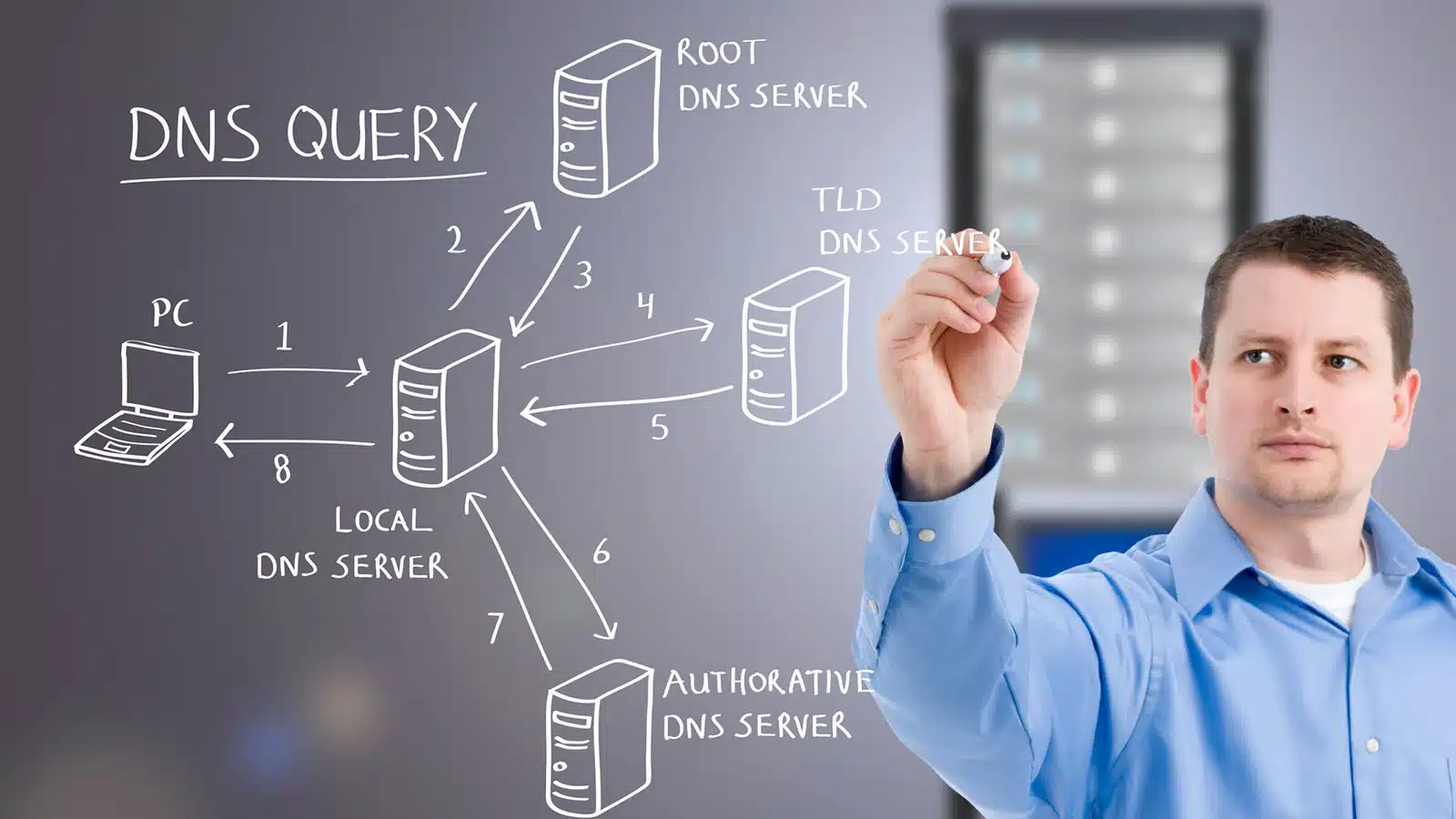
In simple words, domain hosting is where your domain name is stored. In simple terms, it’s the service that makes your website accessible on the internet. When you register a domain (like www.example.com), it’s not just sitting out there in the digital ether waiting for people to find it. It needs to be hosted somewhere so people can access it.
When someone types your domain name into their web browser, the domain web hosting connects the user to your website’s files stored on a server. Without it, your website would be just a fancy address with nowhere to go.
How Does Domain Hosting Work?
To understand how domain hosting works, let’s walk through the process. Imagine you want to create a website for your business. Here’s what happens:
- Choose a Domain Name: This is the first step. You pick a name (e.g., www.yourbusiness.com) that represents your website or business. You’ll register it with a domain registrar like GoDaddy or Namecheap.
- Get Web Hosting: Now, this is where your website’s files, images, and data are stored. Think of it as renting space on the internet. When someone types in your domain name, the web hosting sends them the information they need to display your website.
- Link Domain to Hosting: Well, here’s where domain hosting comes in. You need to connect your domain name to your web host. This is done by updating the DNS (Domain Name System) settings of your domain to point to your web hosting provider.
- Access Your Website: Once everything is linked up, when someone types your domain name into their browser, they are directed to your website’s files stored on the hosting server. Voila! Your website is live and accessible to anyone, anywhere.
The Difference Between Domain Name and Hosting
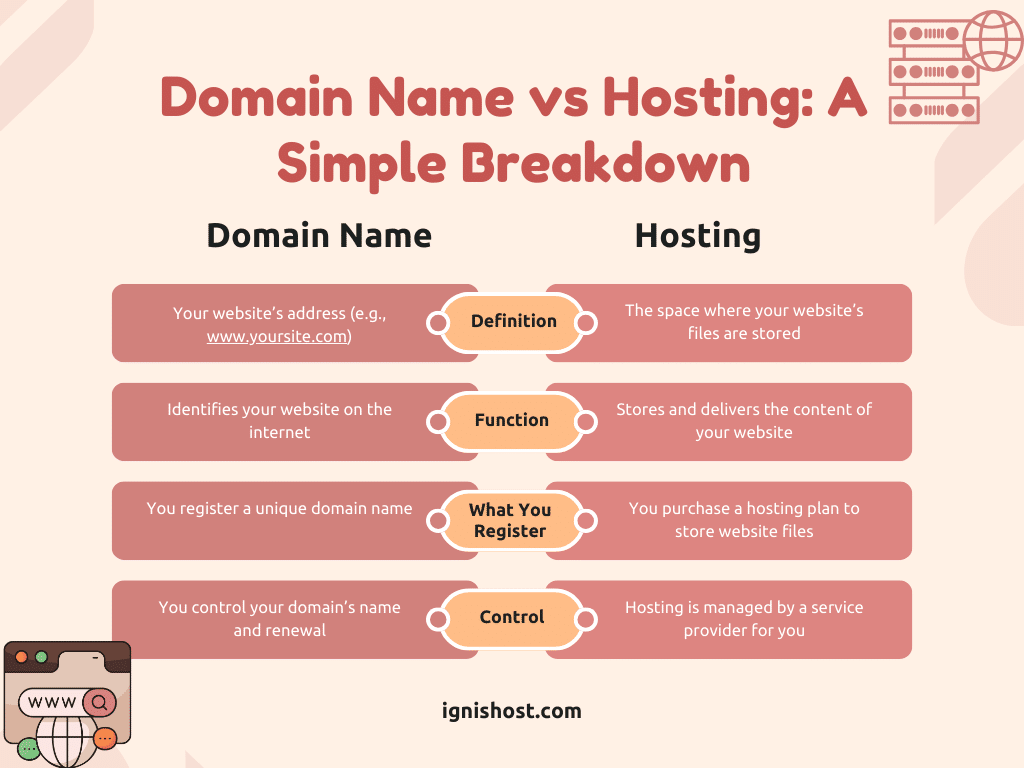
It’s easy to get these terms mixed up, but let’s clear it up:
- Domain Name: This is your website’s address. It’s like your home address in the digital world (e.g., www.yoursite.com).
- Web Hosting: This is the space where your website’s files are stored. It’s like the land where your house (website) sits.
To keep it simple, domain hosting refers to the service that stores your domain name’s information, allowing people to find your website when they type in your domain.
Now that we’ve cleared up the difference, if you’re ready to get your website online, it’s time to explore your hosting options. Check out our guide on website hosting to get started with the right solution for your site!
What is the Difference Between Web Hosting and a Domain Name?
A lot of people ask, “What is web hosting vs domain registration?” It’s simple!
- Domain registration is the process of purchasing and registering your domain name.
- Web hosting is where your website’s files are stored, ensuring your site is accessible to everyone online.
Essentially, web hosting gives your site space on the internet, while domain registration ensures you have a unique address for your website.
Types of Domain Hosting
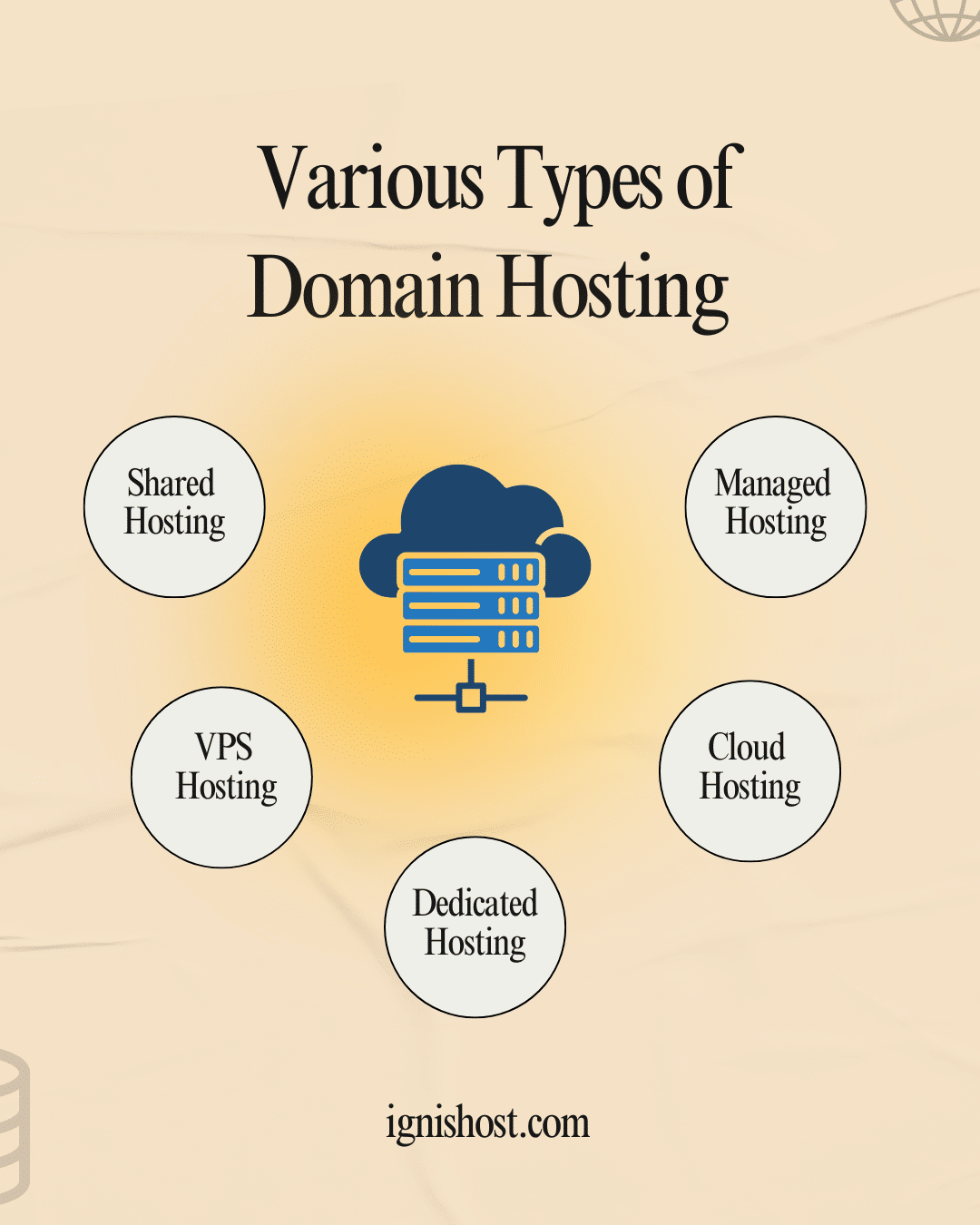
There are different types of hosting services available, each suited to different needs:
- Shared Hosting: This is the most affordable option. Your website shares server space with other websites. It’s perfect for smaller sites with less traffic.
- VPS (Virtual Private Server) Hosting: With VPS hosting, you still share a server, but you get more dedicated resources. This is great for growing websites that need more control and power.
- Dedicated Hosting: This is the big league. You get an entire server just for your website. It’s perfect for large businesses with high traffic and complex needs.
- Cloud Hosting: Cloud hosting uses multiple servers, giving you scalability and reliability. It’s a good option for businesses that need flexibility and high performance.
- Managed Hosting: With managed hosting, the hosting provider handles all technical aspects, including updates, security, and backups. It’s great for those who prefer not to deal with the technical side.
Are you looking for reliable hosting services? Ignishost can do that for you. Explore our hosting services and get ready to make your site recognizable to the audience.
Web Hosting Multiple Domains
If you’re planning to create more than one website, you may need multi-domain hosting. This service allows you to host multiple domains on a single hosting account. Web hosting multiple domains is perfect for businesses or individuals who manage several websites.
Here’s how it works:
- Multiple domain hosting lets you add multiple top-level domains (TLDs) to a single hosting plan, making it easier to manage everything under one roof.
- This is especially useful if you’re creating separate websites for different businesses or projects but want to save on hosting costs.
What Is Lifetime Domain Hosting?
While most hosting plans are billed annually or monthly, lifetime domain hosting offers a one-time fee for domain hosting services. You pay once, and your domain hosting lasts for life. While this sounds appealing, it’s important to check the fine print. Some lifetime hosting services may have limitations or extra fees down the road.
How Does Domain Hosting Affect Your Website’s Speed?

Credit: commonplaces.com
I think we have learned so far that a reliable hosting service is essential for maintaining good website performance. A slow website can turn visitors away, and poor security can leave your site vulnerable to cyberattacks.
When it comes to domain hosting, the performance of your website depends on:
- Speed: A quality hosting provider offers fast load times, which is crucial for user experience and SEO rankings.
- Security: Good hosting services offer SSL certificates, firewalls, and daily backups to protect your site.
How to Choose the Right Domain Hosting Provider
When you’re creating a website, choosing the right domain hosting provider is crucial. Consider these factors:
- Customer Support: 24/7 support is a must, especially if you’re new to domain hosting.
- Scalability: Can your hosting grow with your website? Look for providers that offer easy upgrades as your site grows.
- Reputation: Check reviews and ratings from real customers before committing.
Ending Remarks
So, there you have it! Domain hosting is a crucial part of getting your website live on the internet. It connects your domain name to your website’s files and ensures that your site can be accessed by anyone, anywhere. Once your domain and hosting are set up and connected, you’re ready to launch your site and build your online presence.
Frequently Asked Questions
Here’s everything you need to know about domain hosting, in a nutshell.
What is the difference between web hosting and a domain name?
A domain name is your website’s address, while web hosting is where your website’s files are stored.
Do I need both a domain and hosting?
Yes, you need both. The domain gives people an address to find your site, and hosting is where the site’s files live.
Can I host multiple domains with one hosting account?
Yes, with multi-domain hosting, you can host multiple domains on one hosting plan.
What is lifetime domain hosting?
So, lifetime domain hosting allows you to pay once and have domain hosting for the lifetime of your site, though it may come with certain limitations.
How long does it take to set up domain hosting?
Setting up domain hosting can take anywhere from a few minutes to 48 hours, depending on how quickly DNS settings propagate.