


Running an ecommerce business is all about giving visitors exactly what they are looking for at the right moment. Now imagine a customer browsing your online store, clicking through products, and waiting for pages to load. If your site feels slow or unresponsive, that interest disappears fast. This is where the right hosting makes all the difference. Strong ecommerce hosting keeps your store fast, stable, and easy to use, creating a seamless experience for your visitors. But with so many options available, choosing the right plan can feel confusing. That’s exactly what this blog is here to help with. We’ll break down ecommerce hosting costs, explain what actually matters, and help you understand which hosting plan makes sense for your brand, all while keeping things simple and practical.
What Is Ecommerce Web Hosting (Explained Clearly)

Credit: oberlo.com
At a basic level, ecommerce hosting is the environment where your ecommerce store lives. However, ecommerce hosting is not the same as regular web hosting. Ecommerce websites are interactive, data-heavy, and security-sensitive.
Ecommerce web hosting simply means hosting that can handle:
- Live inventory updates
- Shopping carts and checkouts
- Customer accounts
- Payment integrations
- High database activity
Every time a customer views a product, adds an item to the cart, or checks out, your server processes data. That is why ecommerce hosting requires more power and optimization than a simple website.
This also explains why ecommerce website costs are higher than basic sites. You are paying for performance, security, and reliability.
What You’re Really Paying For in Ecommerce Hosting Costs

Credit: onrampfunds.com
Many people assume hosting costs are arbitrary. They are not. Ecommerce hosting costs usually reflect the following components.
Server Resources
This includes CPU, RAM, storage, and bandwidth. Ecommerce sites consume more of each because they run databases, scripts, and user sessions simultaneously.
More traffic and more products mean higher resource usage.
Performance Optimization
Good ecommerce hosting includes caching, SSD storage, and sometimes CDN integration. These tools reduce load times and help pages render quickly.
Speed is critical. Even small delays increase bounce rates and cart abandonment.
Security Protections
Ecommerce sites handle customer data, including names, emails, and addresses. Hosting must protect this data.
Security features often include:
- SSL certificates
- Firewalls
- Malware scanning
- Automated backups
These protections add to hosting costs but reduce the risk of breaches.
Support and Maintenance
When something breaks, support quality matters. Managed hosting includes monitoring, updates, and troubleshooting. This reduces downtime and stress.
Factors That Influence Ecommerce Hosting Costs
Understanding these factors helps you choose ecommerce hosting that fits both your budget and growth goals.
Traffic and scalability
Traffic volume is the biggest driver of hosting costs. Ecommerce pages are dynamic and resource-intensive. Even a few hundred concurrent users can strain weak hosting.
Important considerations include:
- Average monthly visitors
- Sudden traffic spikes from ads or promotions
- Checkout performance under load
Hosting must handle both daily traffic and peak demand.
Ecommerce platform choice
Your ecommerce platform affects hosting needs significantly.
With self-hosted ecommerce platforms like WooCommerce, you control everything. This offers flexibility but increases responsibility. You must manage hosting, security, and performance.
Hosted platforms simplify management but often cost more monthly. They are popular among users of website builders who prefer ease over control.
Platform choice impacts:
- Technical workload
- Scalability
- Long-term expenses
Types of Ecommerce Hosting and When to Use Them
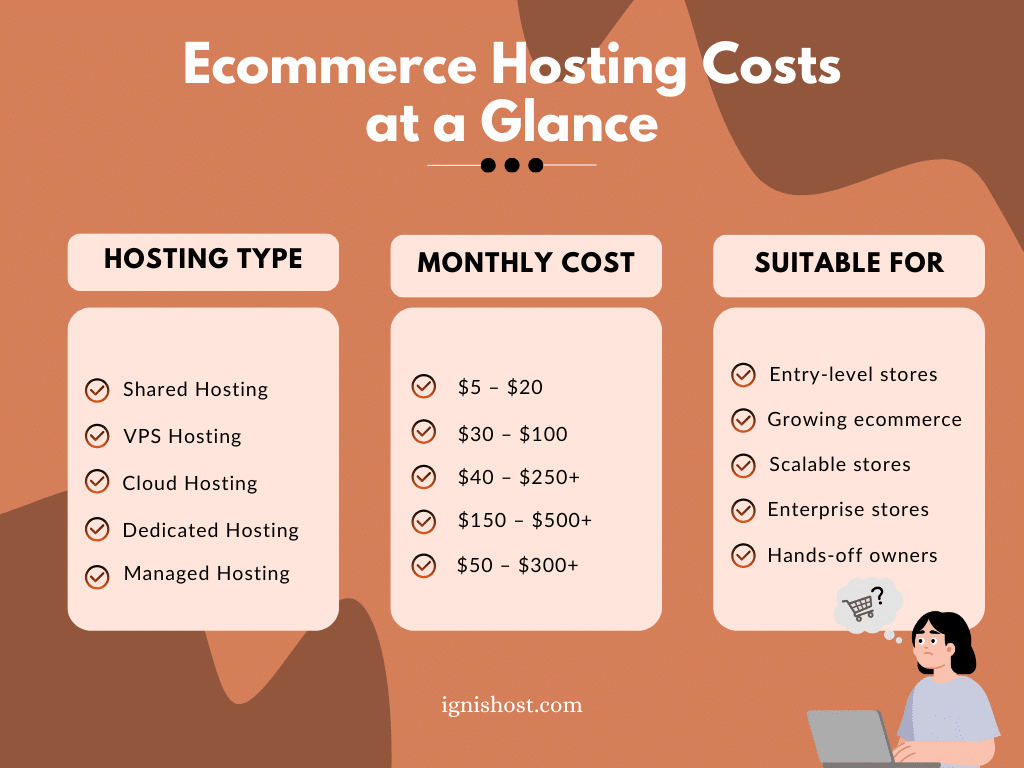
Not every ecommerce store needs the same type of hosting. The right option depends on your store size, traffic, and how much technical work you want to handle. Here’s a simple breakdown.
Shared hosting
Simple and easy. Shared hosting places many websites on one physical server. It is the cheapest option.
Suitable for:
- Very small stores
- Early testing phases
Limitations include slow speeds, limited resources, and poor scalability.
VPS hosting
Then comes VPS hosting. It allocates dedicated resources within a shared server environment. It offers better performance and reliability.
Good for:
- Growing stores
- Moderate traffic
- Businesses planning long-term growth
Cloud hosting
Well, cloud hosting spreads resources across multiple servers. It scales automatically during traffic spikes.
Ideal for:
- Stores running ads
- Seasonal sales
- Rapid growth
Costs vary based on usage.
Dedicated hosting
Dedicated hosting provides exclusive access to a physical server. It delivers maximum control and performance.
Best for:
- Large custom ecommerce projects
- High transaction volumes
- Complex infrastructure
Managed ecommerce hosting
Lastly, managed hosting handles updates, backups, and optimization for you.
Best for:
- Small business owners
- Non-technical teams
- Brands focused on marketing and growth
Ecommerce Hosting with Shopping Cart Functionality

Credit: timesofindia.indiatimes.com
A critical requirement is cart performance. Hosting must support cart updates without lag.
Look for:
- Ecommerce web hosting with shopping cart compatibility
- Optimized database handling
- Secure checkout environments
The best ecommerce web hosting with shopping cart support reduces cart abandonment and improves conversions.
Best Hosting for WordPress Ecommerce
WooCommerce is popular but resource-heavy. It requires optimized hosting.
The best hosting for WordPress ecommerce includes:
- WooCommerce-specific caching
- PHP and database optimization
- Strong security for transactions
Generic hosting often struggles with WooCommerce at scale.
Hidden Costs Beyond Hosting
Hosting is only part of the total cost of ecommerce.
Additional expenses include:
- Domain registration and renewals
- Email hosting and email marketing tools
- Security add-ons
- Ongoing web development and maintenance
These contribute to the overall cost of an ecommerce operation.
In-House Vs Agency-Managed Hosting Costs
In-house hosting requires:
- Technical staff
- Monitoring and maintenance
- Time spent fixing issues
This increases development costs and risk if expertise is limited.
Agencies provide:
- Proactive monitoring
- Performance optimization
- Security management
While monthly fees are higher, agencies often reduce downtime and long-term risk.
Budgeting Tips for Ecommerce Hosting

Credit: heinzmarketing.com
To manage ecommerce hosting costs effectively:
- Choose scalable hosting solutions
- Avoid long contracts initially
- Optimize images and plugins
- Review hosting annually
Smart budgeting protects growth.
Why Hosting Affects Ecommerce Success
Hosting is part of your sales funnel.
Better hosting improves:
- Page speed
- Checkout reliability
- Customer trust
That is why choosing the best web hosting services for ecommerce is a strategic decision.
Conclusion
Now, we have come to the conclusion that Ecommerce hosting costs are not just technical expenses. They shape performance, security, and scalability. The right hosting supports growth. The wrong hosting creates friction.
Choose hosting based on your platform, traffic, and technical comfort. Think long-term. Hosting done right becomes invisible, allowing your ecommerce business to focus on selling.
Frequently Asked Questions
Here are some answers you might be looking for:
What is ecommerce web hosting?
Hosting optimized for online selling, including security and cart support.
How much does it cost to host an ecommerce website?
Costs vary based on traffic, platform, and features.
Is affordable ecommerce web hosting reliable?
Affordable hosting works for small stores but has limits.
Does hosting affect ecommerce website costs long-term?
Yes. Poor hosting increases downtime and maintenance.
Which hosting is best for ecommerce businesses?
The best option depends on size, platform, and growth plans.